
Facelifts are often misunderstood. Our approach avoids the ‘windblown’ look, leaving you looking refreshed, younger and completely natural, never overdone.
Book a Consultation


See how a facelift smooths sagging skin and refreshes the facial contours, restoring a natural, youthful look that still feels entirely like you.
Our consultant surgeons take pride in creating results that are elegant and understated, helping you look rested, vibrant and never overdone.


Your facelift journey is guided from consultation to recovery, with every step focused on restoring youthful definition while keeping your result natural and understated.
From selecting the right technique to seeing your refreshed appearance, our surgeons ensure you feel informed, supported and confident throughout the process.
Meet with your consultant surgeon to discuss your goals and concerns. We’ll examine your facial structure and skin quality to determine the best approach for a natural-looking lift.
Your surgeon will recommend the most suitable facelift technique—whether a short-scar, full facelift, or combined face and neck lift—tailored to your anatomy and desired outcome.
Under general anaesthetic, the facial tissues are gently lifted and tightened to restore definition. Most patients stay overnight, with swelling and bruising gradually improving over 1–2 weeks.
Regular follow-ups monitor your healing. As swelling subsides, your refreshed, youthful appearance becomes more visible, leaving you looking natural and well-rested.
The ideal candidate for a facelift is someone who has an excess of skin, has lost volume and wishes to have a surgical procedure to remove any permanent facial lines. There is no ideal age to have a facelift as every face ages differently. Both men and women may consider a face lift and your surgeon will spend time listening to your concerns and then examine you before determining whether a facelift is appropriate.
There are many cosmetic doctors offering ‘non-surgical facelifts using threads, cones or other temporary fixes +/- Injectable Wrinkle Treatments & Dermal Fillers. These techniques promise a lot but can in no way remove excess skin or tighten the underlying tissues to provide a long term result. The only way to remove excess skin is by excising it and this leaves a scar. There are many different types of surgical facelift and different patterns of skin excision, all of which your surgeon will discuss with you at surgery.
A facelift is carried out under sedation or general anaesthetic and typically takes 2-3 hours depending on the individual patient’s requirements.
Short scar or ‘MACS’ facelift – An incision is made in the natural skin crease in front of the ear and into the hairline just above the ear. Through this incision, the skin is lifted off the layer just deep to the skin which can then be tensioned using several looped sutures to lift the deeper facial tissues. The skin excess is then carefully re-draped and redundant skin is removed before closing the incision without tension. If necessary, extra volume can be added to the cheek area using fat transfer to restore a youthful fullness to the cheeks.
‘Full’ facelift – Some patients will have a significant amount of skin that needs to be removed as part of a facelift and also will need the neck area to be tightened at the same time as the rest of the face. If your surgeon recommends a full face lift, the incision will be in front of the ear as for a short scar lift and will continue into the hairline behind the ear, with most of the incision hidden in the crease behind the ear. This approach allows your surgeon to improve the definition of the jawline and to discretely remove larger amounts of excess skin than can be achieved with a short scar lift.
Full face and necklift – A combined face and necklift allows your surgeon to tighten the tissues in front of the neck in the midline and to divide any prominent vertical bands in the neck as well as remove excess fat. that are seen with the aging neck.



Your surgery will last between two to three hours and you will usually be able to go home the same day as your surgery. We do not routinely use drains for facelift surgery. You will asked to leave all dressings intact until you return to TPSG at 1 week for a wound check and dressing change. After 1 week you should be in minimal discomfort and be able to return to light duties at work at 1 – 2 weeks. We ask that you refrain from strenuous activity or exercise until 6 weeks after your surgery. Bruising and discoloration of the face may be visible for the first 2 weeks. The face will initially be swollen and this will subside over 2 weeks.
A facelift has an immediate effect by ‘resetting the clock’ ten years earlier. However, the ageing process will continue so that after ten years or so the face will return to the appearance it had before the surgery.
Facelift surgery is low risk however it cannot be carried out without scarring which in minority of patients can be unsightly. Fortunately, all scars improve with time. Other risks in the immediate aftermath of surgery are bleeding, bruising, swelling, delayed healing and infection. Nobody’s face is truly symmetrical and it is possible for there to be some asymmetry after surgery. Damage to the nerves that move the muscles in the face is a very rare complication which would lead to temporary or permanent paralysis of one side of the face. This is why it is important to choose surgeons such as those at TPSG who are properly qualified. Your surgeon will go through the risks of the operation in more detail at your consultation.

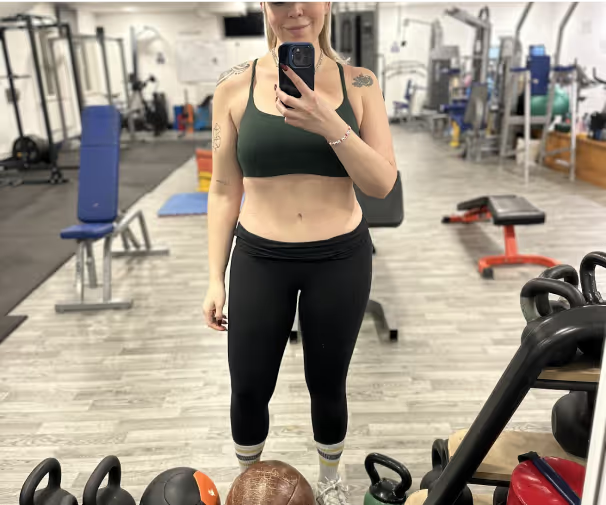
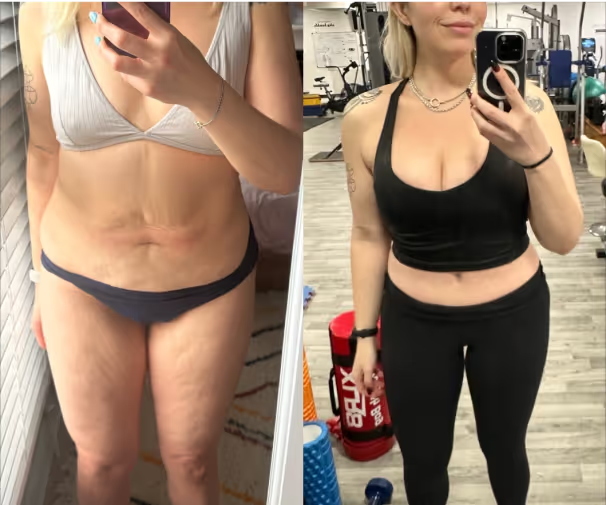
The day of surgery, I felt very taken care of, and had no real fears and woke up with the body of my dreams. Thank you to everyone, I will continue to recommend you to anyone thinking of plastic surgery in the UK.
TPSG offers short-scar (MACS) facelifts, full facelifts, or combined face & neck lifts. Which is right for you depends on your skin laxity, bone structure and desired level of correction.
The procedure takes around 3-4 hours and is carried out under general anaesthetic. An overnight hospital stay is usually required.
Many patients feel well enough for light work or non-strenuous tasks within 1-2 weeks. More intense activity, exercise or social events are generally postponed until swelling and bruising have settled.